
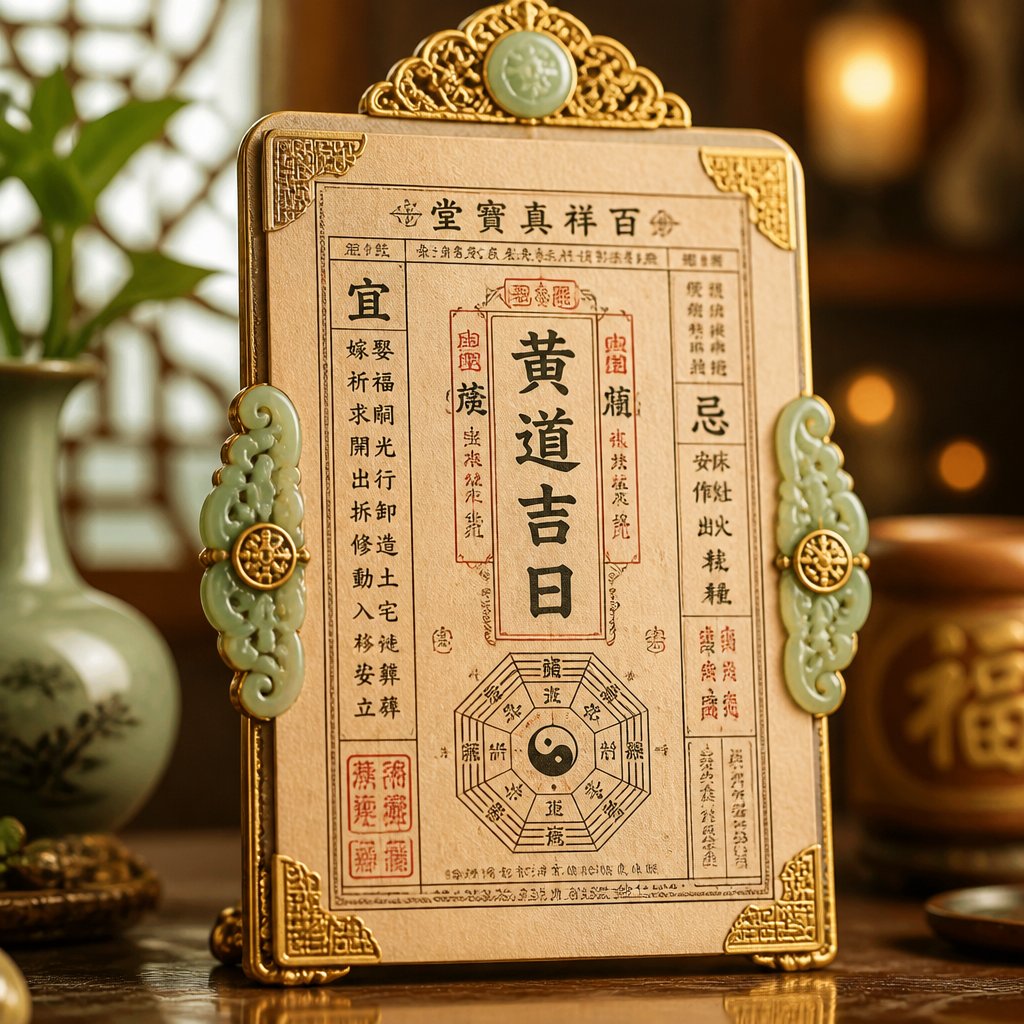
The Chinese fortune calendar — often called the 通书 (tōngshū) or traditional Chinese almanac — has guided families, businesses, and rulers for over two thousand years. It is far more than a simple date-keeping system. In my practice across Malaysia, I have used the fortune calendar for everything from selecting wedding dates for couples to choosing ground-breaking ceremonies for new developments. It is, in many ways, the most practical application of classical Chinese metaphysics 玄学 (xuánxué) that exists.
This guide explains what the Chinese fortune calendar is, how it works, and how you can use it to make better decisions in your daily life.
What Is the Chinese Fortune Calendar?
The Chinese fortune calendar is a traditional system that classifies each day according to various auspicious and inauspicious factors drawn from Chinese astrology, the Five Elements 五行 (wǔxíng), and the sexagenary cycle 六十花甲 (liùshí huājiǎ). Unlike the standard Gregorian calendar, the fortune calendar provides specific guidance on which activities are favourable on each day and which should be avoided.
The system is based on the interaction of several key components:
- The Heavenly Stems and Earthly Branches (天干地支, tiāngān dìzhī) — the sixty-day and sixty-year cycle that forms the backbone of all Chinese calendrical systems
- The Five Elements — each day carries a specific elemental composition that interacts with your personal BaZi chart
- The Twenty-Eight Lunar Mansions (二十八宿, èrshíbā xiù) — an ancient system of celestial divisions that influences daily fortune
- Various annual deities and spirits — including the Tai Sui 太岁 (Grand Duke Jupiter) and the Flying Star 飞星 energies of the year
In my experience, the most powerful use of the fortune calendar comes when it is combined with a personal BaZi 八字 analysis. A day that is generally auspicious for weddings may or may not be good for you specifically — the fortune calendar provides the general framework, but your individual chart provides the specific application.
The History and Tradition
The Chinese fortune calendar traces its origins to the Han Dynasty (206 BCE – 220 CE), when court astrologers began systematically recording which days were favourable for imperial activities — military campaigns, coronations, building projects, and harvest rituals. Over centuries, these observations were codified into what became the Tongshu 通书, or “Comprehensive Book,” which the common people also adopted for everyday decisions.
The most famous version of the fortune calendar used today, particularly in Cantonese-speaking regions including Malaysia, is the Tong Sheng 通胜 — a homophone that reads as “complete victory” in Cantonese. This version is updated annually and remains widely consulted by Chinese families across Southeast Asia.
How the Fortune Calendar Works
The Chinese fortune calendar assigns each day a set of indicators that determine its suitability for different activities. These indicators include:
1. The Day’s Heavenly Stem and Earthly Branch
Each day is assigned a combination from the sexagenary cycle. For example, a day might be a 甲子 (Jiǎ Zǐ) day — Wood Rat — which carries specific energetic qualities. The date’s Stem-Branch combination interacts with your personal BaZi chart to determine whether it supports or clashes with your natural energy.
2. The Day’s Element
Each day is governed by one of the Five Elements — Wood, Fire, Earth, Metal, or Water. The elemental day dictates which activities are supported:
- Wood days (木日) — good for planting, starting new projects, creative work
- Fire days (火日) — favourable for celebrations, moving house, bold initiatives
- Earth days (土日) — suitable for construction, foundation-laying, property matters
- Metal days (金日) — auspicious for business deals, cutting ties, surgery or medical procedures
- Water days (水日) — good for travel, negotiation, cleansing rituals, and spiritual practice
3. Auspicious and Inauspicious Designations
Each day receives specific labels such as:
| Auspicious Labels | Meaning |
|---|---|
| 宜祭祀 (yí jìsì) | Good for ancestral worship and offerings |
| 宜嫁娶 (yí jiàqǔ) | Auspicious for weddings |
| 宜开市 (yí kāishì) | Favourable for opening a business |
| 宜入宅 (yí rùzhái) | Good for moving into a new home |
| 宜动土 (yí dòngtǔ) | Suitable for breaking ground on construction |
| Inauspicious Labels | Meaning |
|---|---|
| 诸事不宜 (zhū shì bù yí) | Nothing of importance should be done |
| 忌嫁娶 (jì jiàqǔ) | Not suitable for weddings |
| 忌开市 (jì kāishì) | Avoid opening a business |
| 岁破 (suì pò) | Clashing with the year’s Tai Sui energy |
4. The Twenty-Eight Lunar Mansions
The Chinese fortune calendar also tracks the 28 Lunar Mansions 二十八宿 — an ancient division of the celestial sphere that originated in Chinese astronomy. Each day falls under one of these mansions, which carries specific qualities. For example:
- 角宿 (Jiǎo Xiù) — Horn mansion, associated with Wood, good for examinations and official matters
- 心宿 (Xīn Xiù) — Heart mansion, associated with Fire, unfavourable for weddings
- 斗宿 (Dǒu Xiù) — Dipper mansion, associated with Wood, excellent for construction and farming
When to Consult the Chinese Fortune Calendar
In my practice, I recommend consulting the fortune calendar for the following occasions:
Weddings and Engagements
This is the most common reason clients seek my help with date selection. A wedding date must avoid clashes with both the bride’s and groom’s birth animals, the year’s Tai Sui 太岁方向, and various annual afflictions. I have seen marriages that began under poorly chosen dates face unnecessary friction, while those aligned with favourable energy flow smoothly from the start. This is why the Chinese almanac remains an essential tool for modern couples.
Moving into a New Home
The date you move into a new home — called 入宅 (rùzhái) — sets the energetic tone for your entire residency. A favourable moving date takes into account the occupants’ Chinese zodiac signs, the home’s facing direction, and the annual Flying Star 飞星 influences for that year. For more on this, consult my guides on home Feng Shui and house direction.
Starting a Business
Opening the doors of a new business on an auspicious date can significantly affect the venture’s long-term success. The date must align with the founder’s BaZi chart and the nature of the business itself.
Ground-Breaking and Renovation
Any construction or renovation that disturbs the earth should begin on a day when the Earth elements are harmonious and the year’s earth-afflicting spirits are at rest.
Major Life Events
Starting a new job, signing important contracts, and even scheduling surgery can benefit from fortune calendar guidance.
Chinese Fortune Calendar vs. Gregorian Calendar
One important distinction that many people misunderstand: the Chinese fortune calendar follows the lunisolar cycle, not the purely solar Gregorian calendar. This means that Chinese New Year falls on a different Gregorian date each year — typically between 21 January and 20 February — and that the fortune calendar’s auspicious designations shift annually.
The fortune calendar also tracks the twenty-four solar terms 二十四节气 (èrshísì jiéqì), which are crucial for agricultural planning and health practices. These solar terms are related to the movement of the sun and are more stable across years than the lunar months.
How to Use the Fortune Calendar for Daily Life
You do not need to be a master of classical Chinese metaphysics to benefit from the fortune calendar. Here are simple practical steps:
- Know your Chinese zodiac sign — use the Chinese zodiac calculator to confirm your birth animal and element
- Identify the year’s Tai Sui — find out which direction the Grand Duke Jupiter occupies for the current year
- Check the general daily designations — avoid days marked 诸事不宜 for important activities
- Match the day’s element to your goal — choose a day with elemental support for what you plan to do
- For critical events, consult a professional — weddings, business launches, and home moves benefit from a BaZi-informed date selection
I offer date selection services as part of my Feng Shui consultations, where I combine the fortune calendar’s general guidance with your specific BaZi 八字 reading.
Annual Updates and Forecasts
The Chinese fortune calendar is updated annually based on the specific energies of the coming year. For 2026 — the Year of the Fire Horse 丙午 (Bǐng Wǔ) — I have prepared detailed forecasts covering the Flying Star 2026 influences, Tai Sui 2026 considerations, and Feng Shui adjustments for 2026 that will help you navigate the year with confidence.
For those seeking auspicious dates after Chinese New Year, I also maintain a specific guide to the auspicious days to start work in 2026.
A Note on Authenticity
In recent years, many websites and mobile applications have begun offering simplified fortune calendar readings. While these can serve as a general orientation, I must caution you: a one-size-fits-all digital reading cannot account for the complex interactions between your personal BaZi chart and the day’s energies.
The true Chinese fortune calendar tradition — which has been refined over two millennia — requires the interpretation of a trained practitioner who understands the full system of Chinese beliefs and rituals, from the Heavenly Stems and Earthly Branches to the annual Flying Star arrangements and personal element interactions.
If you are facing a significant life decision and would like to ensure it begins under favourable cosmic conditions, I invite you to reach out for a consultation. Choosing the right date is one of the simplest and most effective ways to harmonise your actions with the natural rhythms of the universe.
