
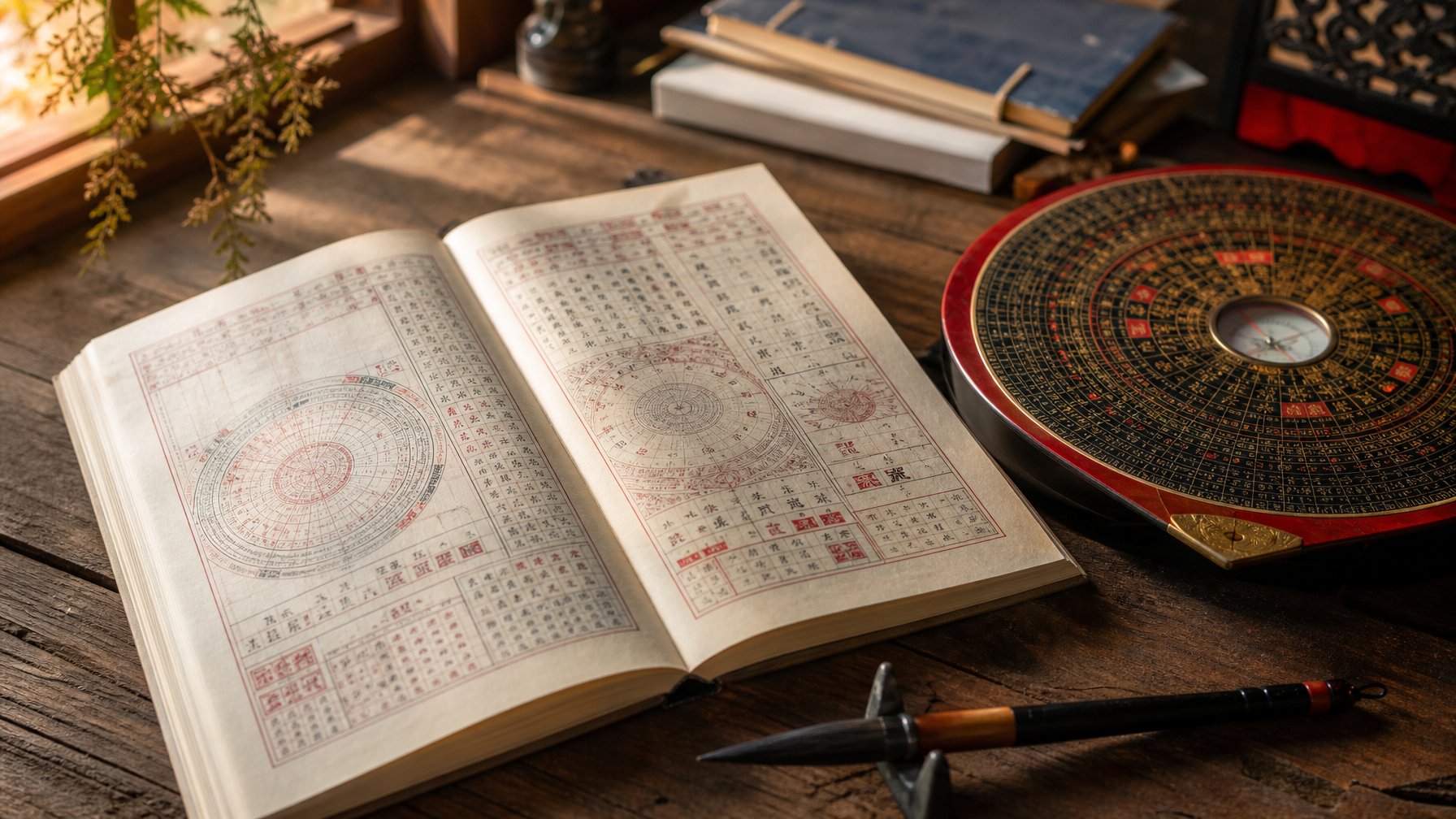
A Tongshu (通書), sometimes written as Tong Shu or Tung Shing, is the traditional Chinese almanac used to choose auspicious dates and avoid unsuitable timing. In my work, I describe it as a calendar of energetic weather. Just as you would not hold an outdoor wedding during a thunderstorm, you should not begin important life events on a day whose 氣 (qì) conflicts with the action you want to take.
Many people in Malaysia know the Tongshu through simple daily labels: good for marriage, bad for renovation, suitable for moving house, avoid signing contracts. Those labels are useful, but they are only the surface. A proper reading considers the Heavenly Stems 天干, Earthly Branches 地支, twelve officers 十二建除, stars, clashes, and the personal BaZi 八字 of the people involved.
This guide explains what the Tongshu is, how it is used, and why date selection should be practical rather than superstitious. If you are planning a major event, also read my Chinese almanac guide and use the BaZi calculator to understand how personal timing affects the final choice.
SERP Notes and What Search Results Usually Cover
When I checked the Malaysia search results for tongshu, the top pages were mostly almanac tools, daily calendar pages, and software-style references. Some pages had long lists of daily auspicious activities, Flying Star notes, or Chinese calendar data. A few were extremely long because they generated repeated daily content, while others had almost no explanatory text.
The common gap is interpretation. Many pages tell you whether a day is “good” or “bad,” but they do not explain why. They rarely show how to match a date with a specific person, a specific action, and a specific property. In classical practice, these three must be read together:
- The day itself
- The person or family using the day
- The activity being performed
- The location or Feng Shui context
This article focuses on that practical interpretation, because choosing dates without context is like choosing medicine without knowing the patient.
What Does Tongshu Mean?
The Chinese words 通書 can be understood as a “comprehensive book” or “general almanac.” It records cycles of time and gives guidance on which activities harmonise with each day. Older families may also call it 黃曆 (huánglì) or 通勝 (tōngshèng), especially in Cantonese-speaking communities.
A Tongshu is not merely a calendar. It combines astronomy, seasonal cycles, Chinese metaphysics, folk practice, and accumulated date-selection rules. It may include:
- Lunar dates and solar terms 節氣
- Heavenly Stem and Earthly Branch combinations
- Zodiac clashes and harms
- Daily officers and auspicious stars
- Activities suitable or unsuitable for the day
- Directions to avoid
- Notes for weddings, burials, renovations, openings, and travel
In a modern consultation, I do not ask clients to follow every line blindly. Instead, I identify the rules that matter for the decision. Opening a shop, choosing a wedding day, starting renovation, moving into a home, and signing a contract each require different criteria.
Why Auspicious Date Selection Matters
Timing is one of the three pillars of classical metaphysics: Heaven, Earth, and Man. Heaven is time. Earth is place. Man is action. Feng Shui mainly studies Earth; BaZi studies the relationship between a person and time; the Tongshu helps choose the right moment to act.
A good date does not guarantee success by itself. If the business model is weak, the relationship is unstable, or the property has severe Feng Shui problems, a good day cannot fix everything. But a suitable date reduces resistance. It lets the action begin with supportive 氣 rather than conflict.
I often explain it this way: if you want to sail, you still need a good boat and a capable captain. But choosing the tide and wind correctly makes the journey smoother. The Tongshu helps choose that tide.
The Main Components of a Tongshu Reading
Heavenly Stems and Earthly Branches 天干地支
Every day carries a Stem and Branch. Together they form one of the sixty combinations in the sexagenary cycle 六十甲子. For example, a day may be 甲子, 乙丑, 丙寅, and so on. This combination tells us the elemental nature of the day and how it interacts with the person’s BaZi.
If a day clashes with your year branch, it may be unsuitable for personal matters. If it clashes with your day branch, I become even more cautious for marriage, signing, surgery, or major commitments. This is why a generic “good day” may still be poor for one specific person.
The Twelve Officers 十二建除
The Twelve Officers describe the functional nature of each day. Common categories include Establish 建, Remove 除, Full 滿, Balance 平, Stable 定, Initiate 執, Break 破, Danger 危, Success 成, Receive 收, Open 開, and Close 閉.
For example, an Open 開 day may support openings, launching, and public activity. A Close 閉 day may suit storage, retreat, or completion, but not necessarily a grand opening. A Break 破 day is usually avoided for major beginnings unless the purpose is to dismantle, remove, or end something.
Auspicious and Inauspicious Stars
The Tongshu also lists stars and deities that influence the day. Some support marriage, wealth, travel, learning, or construction. Others warn against digging, burial, legal conflict, or medical procedures. These stars are read together, not one by one in isolation.
This is where experience matters. A day with one negative indicator may still be usable if the main structure is strong and the activity is not affected by that warning. A day with many “good” labels may still be rejected if it clashes with the client’s BaZi.
Common Activities People Use Tongshu For
Weddings and Engagements
For marriage, I check both partners, not only the couple’s zodiac animals. The day should avoid clashing with the bride and groom, and ideally should support harmony, commitment, and family blessing. I also consider the parents when the family structure is traditional.
A wedding day is not just a party date. It marks the formal beginning of a household. That is why I treat it with care.
Moving House
Moving into a home activates the relationship between people and property. I check the residents’ BaZi, the home’s Feng Shui, and the day’s suitability for 入宅 (rùzhái), entering the residence. This works together with house-clearing guidance such as my cleansing a house guide and broader home Feng Shui principles.
Renovation and Groundbreaking
Renovation is sensitive because it disturbs Earth 氣. Drilling, hacking, roof work, and kitchen or toilet changes can activate unfavourable sectors. The Tongshu may say a day is acceptable for renovation, but I still check annual afflictions, especially Tai Sui 太歲, Sui Po 歲破, and San Sha 三煞. You can read more in my Tai Sui 2026 guide.
Business Opening
For a business opening, I look for dates that support wealth, visibility, customer flow, and the owner’s favourable elements. The opening hour matters as much as the day. A shop, clinic, or office should also have proper entrance and cashier placement. For full support, see our Feng Shui services.
Signing Contracts
Contracts need stability, clarity, and low conflict. I avoid clash days, break days, and days with strong dispute indicators. The best date depends on whether you are signing a lease, employment agreement, partnership, property purchase, or settlement.
How to Read a Tongshu Without Getting Confused
The first rule is to define the activity clearly. “Good day” means nothing until we ask: good for what? A day suitable for cleaning may not be suitable for marriage. A day suitable for burial may not be suitable for business launch.
The second rule is to check clashes. At minimum, avoid days that directly clash your Chinese zodiac year. For important matters, check your full BaZi rather than only the animal sign. If you are unsure of your sign, use the Chinese zodiac calculator as a basic starting point.
The third rule is to consider the hour. A good day with a poor hour may weaken the outcome. In professional date selection, we often choose both date and time so the action begins at a supportive moment.
The fourth rule is to stay practical. If the only “perfect” date causes family conflict, business disruption, or travel difficulty, it may not be perfect in real life. Classical wisdom should support life, not make it impossible.
Tongshu, BaZi and Feng Shui: How They Work Together
Tongshu gives the general quality of the day. BaZi shows whether that day supports the person. Feng Shui shows whether the space can receive the action. When these three agree, the result is usually smoother.
For example, a client may find a general auspicious day for moving house. But if that day clashes the owner’s Day Branch, I may reject it. If the day is personally suitable but renovation activates a harmful annual sector, I may adjust the time or recommend remedies. If the home’s entrance is poorly positioned, I may choose a quieter activation rather than a large ceremony.
This is why I do not rely on printed labels alone. I use the Tongshu as a foundation, then refine it through BaZi and Feng Shui.
Mistakes to Avoid
The most common mistake is choosing a day only because an app says it is auspicious. Apps can be useful, but they rarely know your personal chart, your property, or the exact purpose.
The second mistake is focusing only on the zodiac animal. Your year animal is important, but it is only one of four BaZi pillars. Your day pillar often matters more for marriage, health, and personal commitments.
The third mistake is becoming fearful. If you accidentally choose a less-than-ideal date for a small matter, do not panic. Not every action requires professional date selection. Reserve careful Tongshu work for major life and business decisions.
The fourth mistake is ignoring the human side of timing. I have seen families choose a technically strong date, then create stress because relatives cannot attend, contractors are unavailable, or the business team is unprepared. That is not good Feng Shui. A useful Tongshu date should support both Heaven timing and human cooperation. When there are several acceptable dates, I normally choose the one that also brings calm, readiness, and practical order.
Key Takeaways
- A Tongshu 通書 is a Chinese almanac used for auspicious date selection.
- A “good day” must match the activity, the person’s BaZi, and the Feng Shui context.
- Major events such as weddings, moving house, renovation, business openings, and contracts deserve careful timing.
- Do not rely only on generic app labels or zodiac animal rules.
- The best date is one that is metaphysically supportive and practically workable.
Used properly, the Tongshu is not superstition. It is a disciplined way of respecting time. If you need help selecting a date for a wedding, renovation, business launch, or move-in, you can contact Master Yap for a personal Tongshu and Feng Shui consultation.
