
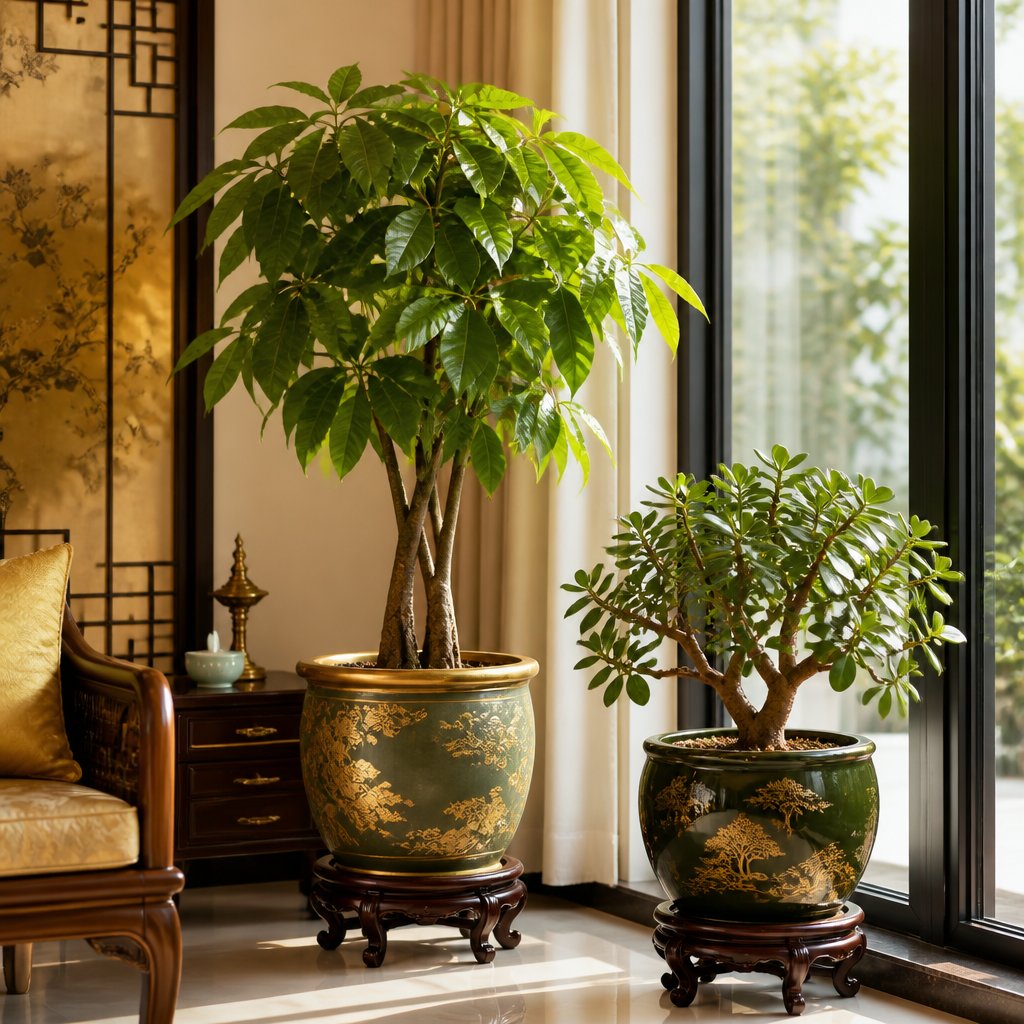
A feng shui tree can be a living plant, a crystal money tree, or a symbolic tree placed to invite growth. In Malaysian homes, I see all three: a jade plant beside the balcony door, a money tree on a console, or a gemstone tree on an office desk. The question clients ask me is usually simple: “Master Yap, is this tree lucky?”
In my reading, the better question is: does this tree bring the right kind of 氣 (qì) to the right place? A tree carries Wood 木 energy. Wood means growth, planning, kindness, reputation, study, family harmony and the ability to rise after pressure. But Wood can also become too aggressive when it is oversized, thorny, dying, or placed in a sector that cannot receive it.
This guide explains how I assess a feng shui tree in real homes and offices. If you want the wider plant foundation, start with my feng shui and plants guide, then compare this with the money plant guide and front door plants guide.
What the SERP Shows — and What It Misses
The current search results for “feng shui tree” are mixed. Some pages discuss money plants, some list houseplants, some focus on decorative crystal trees, and image-heavy results show many symbolic tree displays. Several accessible competitors are short product or idea pages, while larger guides often sit behind bot protection. Where headings are visible, the common themes are plant type, placement direction, wealth symbolism, and general care.
That information is useful, but the gap is clear: many articles treat a feng shui tree as a lucky object by itself. Classical 風水 (fēng shuǐ) is not like that. A plant or tree is not automatically auspicious just because it is green or expensive. It must be healthy, proportionate, suitable for the room, and harmonious with the Five Elements 五行.
A tree that blocks the entrance can reduce opportunity. A tree that softens a harsh corner can improve comfort. A crystal tree that becomes clutter on a messy desk may do very little. This is why I always combine symbolism with form, direction and daily care.
What a Feng Shui Tree Represents
A tree grows upward and outward. Its roots hold Earth 土, its trunk shows stability, and its leaves express Wood 木. In Chinese metaphysics, Wood is connected with spring, renewal, learning, compassion and steady development. It is not the same as sudden gambling luck. It is the luck of patient growth.
When a client wants better career progress, I often look for places where Wood can support study, planning and reputation. When a family wants more harmony, I look at how living plants can soften hard lines in the living room. When a business owner asks about wealth, I check whether the entrance, counter and office desk have clear qi flow before adding any tree.
The best feng shui tree supports what is already structurally correct. It should never be used to cover a serious layout problem. If your main door opens into a cramped, dark and blocked foyer, adding a large plant may make the blockage worse. First fix flow, light and cleanliness; then use the tree as a supporting cure.
Living Tree, Money Tree or Crystal Tree?
People use the phrase “feng shui tree” for different objects. Each has a different function.
Living Plants and Small Trees
Living plants are strongest because they carry real growth. They breathe, change, respond to light and need care. Jade plant, money tree, citrus, bamboo palm and ficus can all be used, depending on the home. I prefer rounded leaves for wealth symbolism because they feel full and gentle.
A living tree is suitable when the space can support it. If the corner is too dark, too dry or too hot, the plant will decline. A dying plant is never a cure.
Crystal Money Trees
Crystal trees are symbolic. They are usually made with gemstones such as citrine, amethyst, clear quartz, aventurine or mixed crystals. They do not carry living Wood qi, but they can act as intention anchors. On a clean desk, a crystal tree may remind the owner to plan carefully, protect cash flow and focus on long-term growth.
I use crystal trees more cautiously than living plants. They should look refined, not cheap or crowded. If the wires are sharp, the stones are dusty, or the item becomes one more object in a cluttered shelf, the symbolism weakens.
Artificial Trees
Artificial trees can soften a room visually, but they do not give living Wood qi. I do not reject them completely; sometimes an artificial tree is better than a dying plant in an air-conditioned office. But use it as decor, not as a strong feng shui cure.
If you use an artificial tree, keep it clean and realistic. Dusty plastic leaves create stagnant qi. In feng shui, neglect is more harmful than simplicity.
Best Types of Feng Shui Trees
Money Tree
The money tree is popular because its braided trunk suggests accumulated strength and its leaves suggest expansion. Place it where it has bright indirect light and enough space around the pot. It is suitable for living rooms, office corners and reception areas when proportion is right.
For wealth intention, do not place the money tree where people kick the pot or squeeze around it every day. Wealth qi should feel protected, not constantly disturbed.
Jade Plant
The jade plant has rounded, coin-like leaves. I often recommend it for smaller homes because it is compact and easy to control. It works well near a bright window, on a side table or in an office where a large plant would be too much.
Jade is especially good for teaching the correct attitude toward wealth: slow, steady, maintained. It is not a magic switch. If you forget to water it or let it rot, it reflects poor stewardship.
Citrus Tree
In Chinese culture, citrus carries auspicious meaning because of its bright fruit and festive associations. A small calamansi or kumquat tree can be beautiful near an entrance during the right season. The fruit gives a sense of fullness and celebration.
However, citrus needs enough light. Do not force it into a dark indoor corner just because the symbol sounds lucky. In Malaysia, a sheltered balcony or bright porch often works better.
Bamboo and Palm Forms
Bamboo and indoor palms bring upward, flexible Wood qi. They are useful when a room feels stiff, dry or overly square. For detailed palm placement, see my indoor palm plants feng shui guide.
Choose soft forms rather than sharp, spear-like leaves. A plant should calm the room, not point at people like hidden arrows 煞氣 (shā qì).
Where to Place a Feng Shui Tree
Placement depends on the house, but there are several reliable principles.
Near the Entrance, but Not Blocking It
A healthy plant near the entrance can welcome qi, especially when the foyer feels bare. But the plant must not block the door swing, narrow the path, or hide the view into the home. If guests have to step around it, the tree is already too aggressive.
Living Room Corners
A living room corner that feels empty or angular can often receive a feng shui tree. The plant softens the corner and creates a sense of life. This is especially helpful in apartments where beams, cabinets and walls create hard lines.
Keep the pot size proportionate. A tree that dominates the seating area can make family members feel visually pressed.
Office and Work Desk
For business owners, a small jade plant or refined crystal tree can sit on the desk if it does not interfere with paperwork. I prefer the left side of the desk from the seated position when it suits the layout, because this side is traditionally associated with the Green Dragon 青龍, movement and support.
Do not place a large tree directly behind your chair unless there is still a solid wall or proper backing. A plant is not a substitute for support. My feng shui office guide explains this in more detail.
Wealth Corner Considerations
Many people ask whether a feng shui tree belongs in the wealth corner. Sometimes yes, but only after checking the actual layout. The popular corner method is a simplified tool. Classical feng shui also considers facing direction, Flying Stars 飛星, timing and the resident’s 八字 (Bāzì).
If the corner is clean, bright and not overburdened, a small healthy tree may support accumulation. If the corner is a storeroom, toilet wall or cluttered shelf, clear the problem first. You can compare this with my feng shui wealth corner guide.
Directions and Five Element Balance
Wood naturally relates to East and Southeast. These directions often suit plants because East connects with family and health, while Southeast is commonly linked with growth and resources. But I do not place trees by compass direction alone.
In the 五行 cycle, Water 水 nourishes Wood, Wood feeds Fire 火, Wood controls Earth 土, and Metal 金 cuts Wood. If a room already has too much Wood energy, adding another tree may create impatience or overgrowth. If a sector needs Metal or Earth support, a large tree may be counterproductive.
This is why two neighbours in the same condominium may need different recommendations. The floor plan may look similar, but their door direction, room usage, personal BaZi and existing decor can differ.
Trees to Avoid or Use Carefully
Avoid unhealthy, thorny or oversized trees. Cactus-like forms, sharp leaves, exposed dead branches and plants that drip sap can create discomfort. A plant with aggressive thorns may be suitable outdoors for protection in rare cases, but I rarely use it inside a home.
Also avoid placing a tree:
- Directly in the centre of a narrow hallway
- Pressing against a bed headboard
- Blocking a window that provides needed light
- Beside a stove where heat damages the plant
- In a toilet as a forced wealth cure
- Under a leaking air-conditioner
A feng shui tree should improve the feeling of the space immediately. If it makes the room harder to use, the placement is wrong.
Care Is Part of the Feng Shui
In my experience, plant care reveals the real energy of the household. A thriving plant shows attention, rhythm and responsibility. A neglected plant shows delay and avoidance. This is not superstition; it is observation.
Keep the leaves clean. Remove dead leaves quickly. Use a pot that suits the room. Avoid cracked containers. Do not let water stagnate in saucers, because stagnant water can bring dampness, pests and heavy qi.
If you travel often, choose a hardy plant. If the room has poor light, choose a symbolic crystal tree instead of forcing a living plant to suffer. Good feng shui is practical.
My Practical Advice
A feng shui tree is most powerful when it is alive, cared for and placed with purpose. Do not chase every online lucky object. Choose one suitable tree, place it well, and maintain it consistently.
For a Malaysian home, I often begin with a modest jade plant, money tree, palm or citrus plant in a bright and meaningful position. For an office, I may use a small living plant or a refined crystal tree on a clean desk. For a cramped entrance, I may advise no tree at all until the pathway is corrected.
The principle is simple: Wood qi should help life grow. When the tree makes the home feel clearer, softer and more alive, it is doing its work.
Key Takeaways
- A feng shui tree represents Wood 木, growth, renewal and steady development.
- Living plants carry stronger qi than crystal or artificial trees, but they must stay healthy.
- Money tree, jade plant, citrus and gentle palms are common choices for Malaysian homes.
- Placement matters more than price; never block doors, pathways or important light.
- East and Southeast often suit Wood, but true placement depends on the home and the resident.
- Care is part of the cure: dead leaves, stagnant water and dusty trees weaken the effect.
FAQ
Is a feng shui tree always lucky?
No. A feng shui tree is helpful only when it is healthy, proportionate and suitable for the location. A dying or badly placed tree can create stagnant or pressured qi.
Can I put a money tree at the front door?
Yes, if it does not block the entrance and the plant receives enough light. The entrance should feel open and welcoming, not crowded.
Is a crystal money tree as good as a living plant?
It has a different function. A crystal tree is symbolic and can support intention, but it does not carry the same living Wood qi as a real plant.
Which direction is best for a feng shui tree?
East and Southeast are common choices because they relate to Wood energy, family and growth. However, the best direction depends on the full layout and personal BaZi.
What should I do if my feng shui tree dies?
Remove it respectfully, clean the area, and check whether the location had poor light, poor care or unsuitable qi. Do not keep a dead plant as decoration.
