
Foundations of Chinese Spiritual Thought
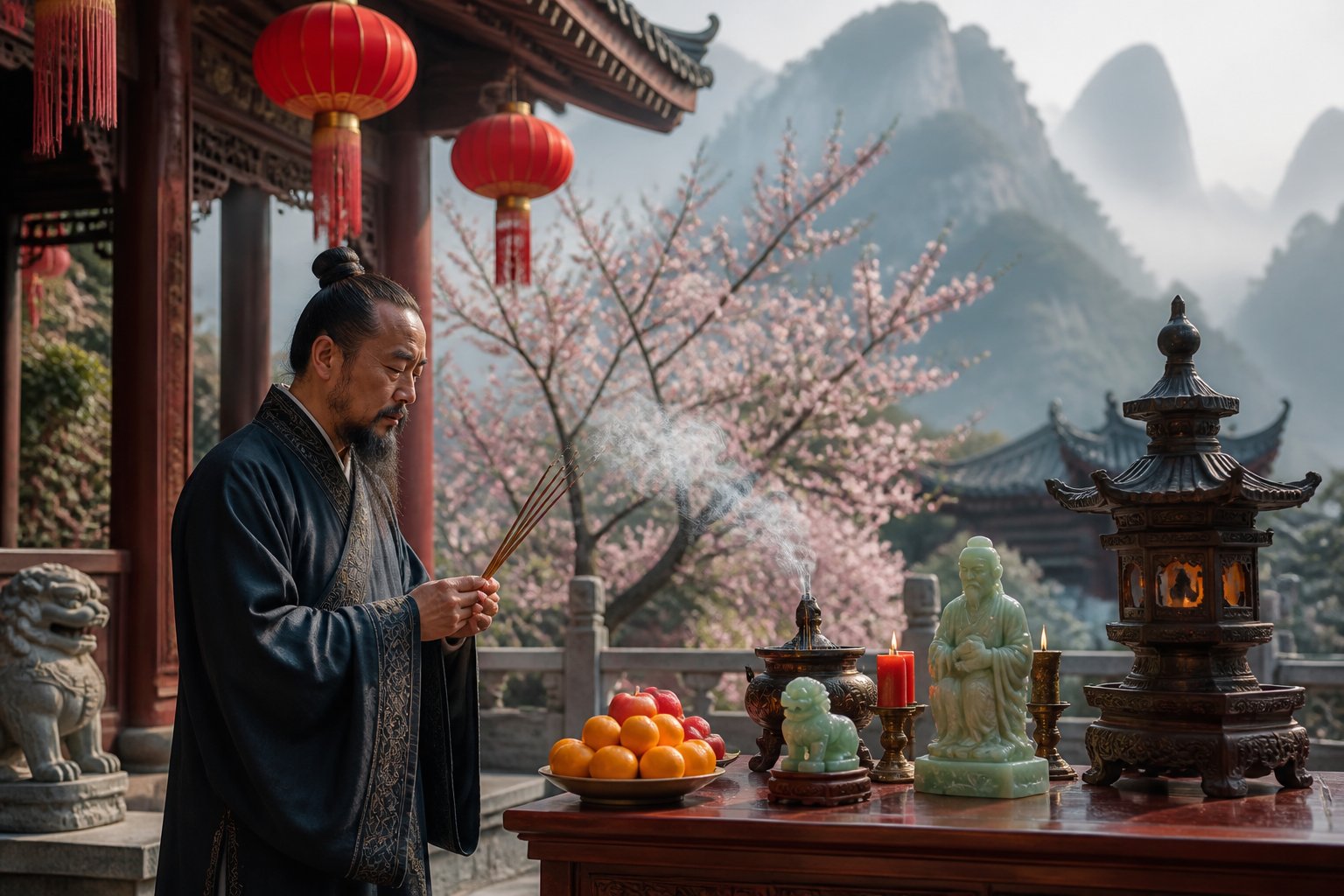
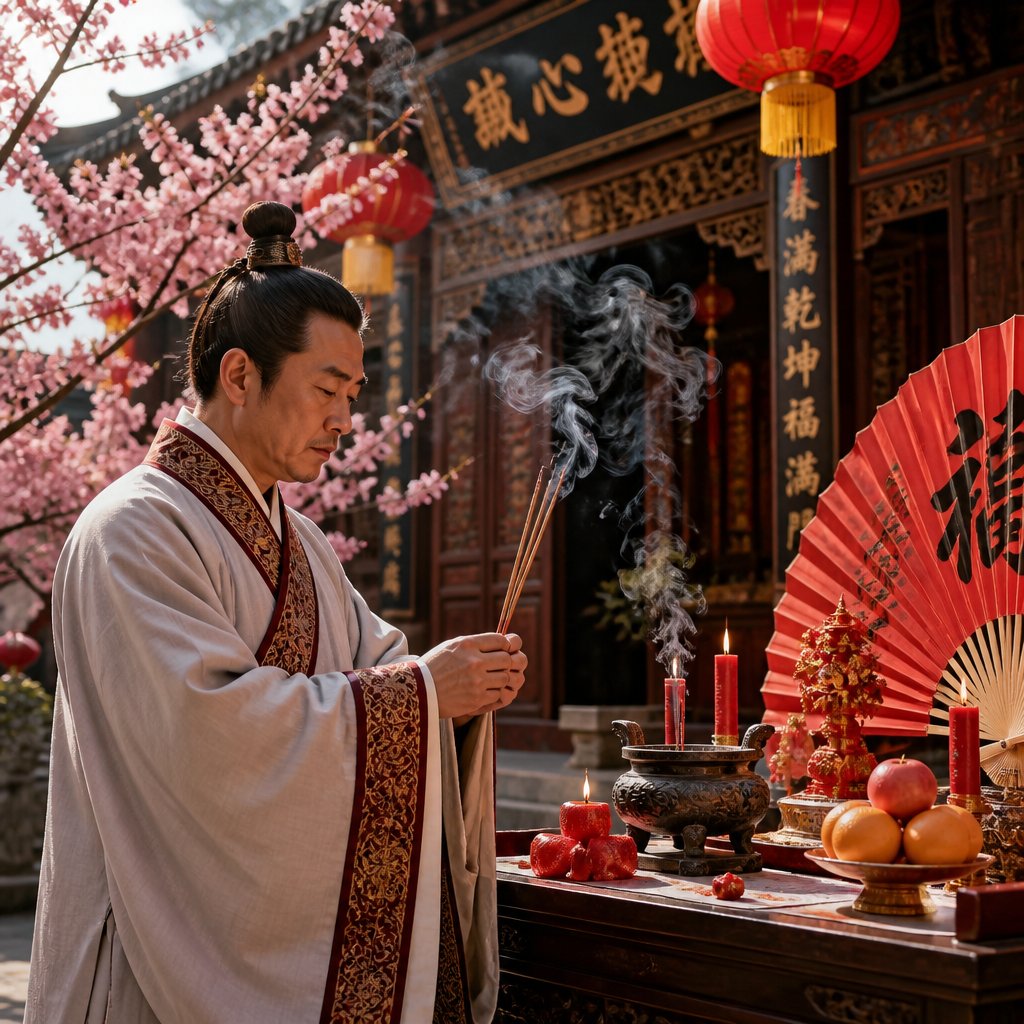
If you walk through a Chinese temple or catch a glimpse of daily rituals in a traditional home, you're seeing layers of spiritual thought that have shaped lives for thousands of years. The philosophical pillars of Confucianism, Taoism, and Buddhism blend with folk practices, creating a spiritual framework that guides everything from family ties to personal growth.
Influence of Confucianism on Daily Life
Confucius taught that your relationships define you. His philosophy revolves around ren (benevolence) and li (proper conduct), ideas that still shape how you treat parents, elders, and your community.
Xiao, or filial piety, is still the heart of Confucian values in Chinese society. You show respect by serving tea to elders, keeping family altars, and celebrating ancestral festivals.
These acts aren't just symbolic—they're a living link between past and present. Harmony stretches beyond family, too.
When you practice reciprocity (shu), you're living by the principle "Do unto others as you would have them do unto you." This helps create social stability.
Core Confucian Principles:
- Ren: Compassion toward others
- Li: Ceremonial propriety in actions
- Xiao: Respect for parents and ancestors
- Shu: Reciprocity in relationships
Confucius believed anyone could become virtuous through education and self-reflection. Your moral cultivation reflects this belief.
Taoism and the Quest for Harmony
The Tao encourages you to move with nature's flow, not against it. Laozi's writings focus on wuwei (non-action), which means acting in tune with the world's rhythms.
You bump into Taoist ideas every day—qi (life energy) and yin-yang balance show up in tai chi, feng shui, and even in how you arrange your living space. Opposites like light and dark, active and passive, constantly shift and transform into each other.
Daoism borrowed from and contributed to Buddhist concepts as Buddhism arrived in China, sparking a lively exchange of ideas. Taoist practices include meditation, breathing exercises, and dietary habits aimed at longevity and spiritual clarity.
The Tao itself stays mysterious and formless. You can't pin it down with logic—you have to experience it through intuition and living naturally.
Buddhism's Spiritual Path in China
Buddhism entered Chinese culture during the Han dynasty around 150 CE. It adapted to local traditions but kept its teachings of compassion and non-attachment.
Buddhist temples in China often blend elements from Confucianism and Daoism. Pure Land Buddhism focuses on devotion to Amitabha Buddha, promising rebirth in the Western Paradise. Chan Buddhism (Zen in Japan) values direct experience through meditation over studying texts.
Guanyin, the Bodhisattva of Compassion, holds a special place in Chinese hearts. When you pray to Guanyin, you're asking for help with suffering—yours or someone else's.
The Buddhist idea of karma fits well with Chinese beliefs about causality. Your actions have consequences that ripple through this life and beyond, shaping ethical choices and personal responsibility.
Role of Folk Beliefs and Ancestor Worship
Your ancestors play a vital role in the spiritual world. Ancestral rites stretch from ancient dynasties to today, forming a bridge between the living and the dead.
Chinese folk religion is practical. You might make offerings at several temples, asking different gods for help with health, wealth, marriage, or career. No one sees this as a contradiction—it's just efficient.
The ancestral cult is built on the belief that your body holds two souls: the hun (ascending soul) and the po (corporeal soul). Proper burial and ongoing offerings keep these souls cared for, and in return, they bless living descendants.
Common Folk Practices:
- Burning incense at family altars
- Offering food and drink to ancestors
- Consulting divination methods for guidance
- Celebrating festivals like Qingming (Tomb Sweeping Day)
You might visit a fortune teller or seek advice from a temple medium. These practices fit right alongside philosophical traditions, blending into what scholars call syncretism—different beliefs working together in daily life.
Confucian Ethics and Social Values
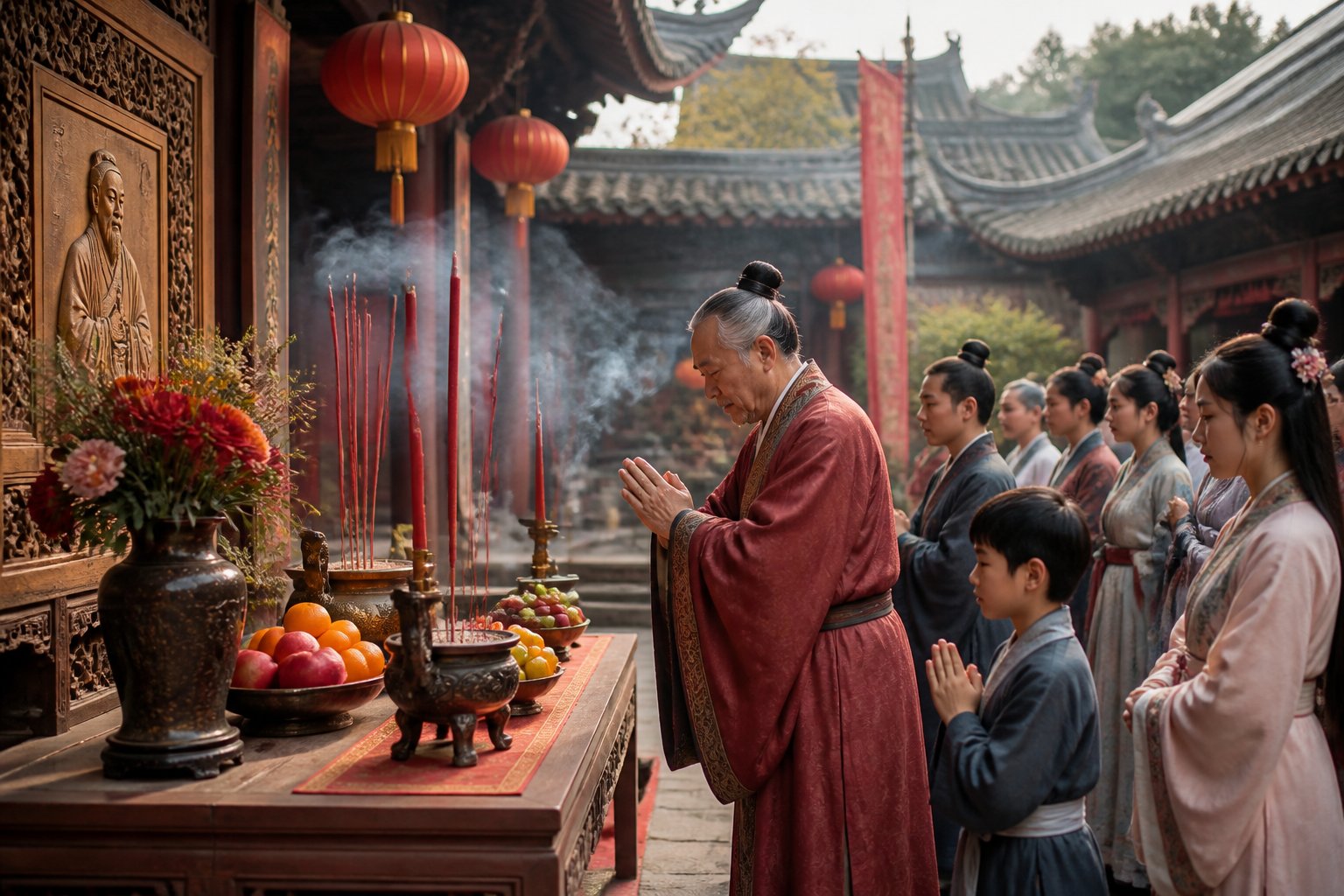
Confucianism asks you to cultivate virtue through relationships, starting with your family and reaching out to society as a whole. These values highlight respect for hierarchy, moral growth, and the way individual character shapes collective harmony.
Filial Piety as a Cornerstone
If you look at Confucianism's social structure, you'll see filial piety—xiao—as the root virtue. It's not just about respecting your parents; it's about recognizing that your life depends on the sacrifices of those who came before.
You honor this debt by caring for aging parents, observing mourning rituals, maintaining family altars, and upholding your family's reputation.
Think of filial piety as the root system of a bamboo grove. Just as bamboo draws strength from connected roots, your moral character grows by honoring your ancestors.
Confucian teachings suggest that if you can't respect your parents, you can't truly serve your community or country.
The Principles of Benevolence and Ritual Propriety
Confucius believed ren (benevolence) and li (ritual propriety) work together like yin and yang. Compassion needs the structure of proper conduct, and rituals need sincere intention to mean anything.
Benevolence means caring about others' wellbeing. You practice it by asking, "What I don't want, I won't do to others." This idea guides everything from family life to government.
Ritual propriety gives benevolence its form. These aren't empty gestures—they include tea ceremonies for elders, specific bows, seasonal offerings at ancestral shrines, and proper seating at gatherings.
The Four Books and Five Classics lay out these practices in detail. When you perform rituals with real feeling, you're not just following rules—you're showing respect and building harmony.
Role of Lineage and Family Structure
Your lineage shapes your place in Chinese society's hierarchy. The family acts as a small version of the state, with clear roles and responsibilities.
Traditionally, the eldest male leads, followed by younger brothers, sons, and then women by age and marital status. You inherit not just property but also social and spiritual duties. Ancestors need ongoing veneration, and it's your job to keep the family line going.
This system creates what Confucian ethics call nested circles of responsibility. Immediate family comes first, then extended relatives, then the clan, and finally society.
Each relationship has its own duties: children obey parents, younger siblings respect elders, wives support husbands, and subjects serve rulers. When everyone does their part, harmony follows.
Taoism: Practices and Harmony with Nature
Taoist practice moves in sync with nature's cycles. Balancing opposing forces, performing rituals, and cultivating life energy offer you tools for wellness and longevity.
These ancient methods help you align your daily life with the natural order. There's something deeply satisfying—almost comforting—about that idea, isn't there?
Balancing Yin-Yang and the Five Elements
Ever notice how a hot summer day feels harsher without a cool breeze at sunset? That's yin-yang philosophy in Taoism in action—opposites that complement instead of clash.
Your body, home, and environment all hold both yin (cool, passive, dark) and yang (warm, active, bright) energies. When these get out of balance, you might feel sick, stressed, or just off.
The Five Elements—wood, fire, earth, metal, and water—add another layer. Each element supports or restrains another: wood feeds fire, fire creates earth, earth bears metal, metal collects water, water nourishes wood.
If you’re overwhelmed by fire energy (stress, anger), you can add water—maybe with colors, materials, or even an aquarium—to restore balance. Traditional Chinese medicine uses these same principles to diagnose and treat imbalances.
Taoist Rituals for Longevity and Wellbeing
When you think about living longer, you might picture modern medicine, but Taoist practices focus on immortality through spiritual and physical cultivation. 让我们一起揭开你命运的帷幕!
Internal alchemy (Neidan) treats your body as a spiritual furnace. You use essence (jing), energy (qi), and spirit (shen), with your mind as the fire. Meditation refines essence into energy, energy into spirit, and spirit into unity with the Tao.
Daily devotional practices include morning recitations, evening chanting, fasting and purification, and breathing exercises to move qi.
Taoist ceremonies blend fasting with offerings at altars, where you give gifts to deities and recite prayers. These rituals aren't just routine—they're real, living connections to the force running through everything.
The Flow of Qi in Daily Life
Picture qi as an invisible stream running through your body and surroundings. When it flows smoothly, you feel alive and clear-headed. When it jams up, illness and bad luck can follow.
你准备好探索命理的奥秘了吗? Your daily relationship with qi starts when you wake up. The way your bedroom is set up affects how qi moves while you sleep.
Sharp corners aimed at your bed create "poison arrows" that mess with energy, while rounded furniture and plants make things flow better.
Feng shui (风水) literally means "wind-water." It’s about how qi moves through spaces. You can help qi flow by keeping entryways clear, placing mirrors to redirect energy, using the Five Elements to balance rooms, and arranging furniture along natural paths.
Harmony with nature underpins Taoist thinking about your environment. Walking in nature, eating seasonal foods, and adjusting your routine to match the seasons all help qi move smoothly.
When you sync your rhythm with the Tao, you stop forcing life and start flowing with it. Maybe that's what real peace feels like.
Buddhism's Unique Adaptations in China
When Buddhism traveled from India to China on the Silk Road, it didn't just settle in—it changed, blending with ancestral traditions to become something uniquely Chinese.
This spiritual transformation sparked new ways of meditating, living in monasteries, and interpreting philosophy. Even now, these adaptations shape Chinese culture in ways that are sometimes obvious, sometimes subtle.
Mahayana and Theravada Traditions
Buddhism in China embraced Mahayana Buddhism as its dominant form, moving away from the Theravada tradition rooted in Southeast Asia.
You'll find this distinction crucial for understanding Chinese spiritual practice.
Mahayana emphasizes the Bodhisattva path—the compassionate ideal of achieving enlightenment not just for yourself, but for all sentient beings.
It's a bit like choosing to return and help others climb the mountain rather than celebrating alone at the summit.
This philosophy resonated with Chinese values of family duty and social harmony.
The tradition gave rise to uniquely Chinese schools.
Chan Buddhism (known as Zen in Japan) developed during the Tang dynasty, focusing on sudden enlightenment through meditation rather than lengthy scripture study.
Pure Land Buddhism offered accessible salvation through devotion to Amitabha Buddha, making enlightenment available to farmers and merchants, not just scholars.
Theravada Buddhism, with its focus on individual monasticism and strict adherence to original teachings, never gained the same foothold in Chinese territory.
Your ancestors leaned toward Mahayana's flexibility, which allowed Buddhism to integrate with Confucian ethics and Daoist naturalism.
Buddhist Monks and Temples
Your local Buddhist temple is more than a house of worship—it's a living bridge between earthly concerns and spiritual awakening.
Chinese Buddhist monks adapted their role to fit within Confucian society, which traditionally valued family continuity over celibate monasticism.
Temple architecture itself reflects this cultural fusion.
Unlike Indian stupas, Chinese Buddhist structures feature:
- Pagodas with upturned eaves
- Courtyards arranged by feng shui
- Incense halls for offerings to ancestors and deities
- Meditation halls separated from public spaces
Monks in China developed the "humanistic Buddhism" approach, engaging actively in social welfare rather than just isolated contemplation.
They run schools, provide disaster relief, and offer spiritual counseling that addresses your daily concerns—from business decisions to family harmony.
Many temples now allow lay practitioners to participate deeply in Buddhist life without taking full vows, acknowledging that you might need to balance spiritual cultivation with family obligations.
Meditation and Enlightenment
Chinese Buddhism changed how you approach meditation and enlightenment, making these ideas less abstract and more accessible.
Chan meditation strips away complexity, teaching you that enlightenment isn't found in scriptures but in direct experience.
The saying "指月之指" (the finger pointing at the moon) reminds you not to mistake the teaching for the truth itself—you have to look beyond the words.
Your meditation practice in the Chinese tradition might include:
- Sitting meditation (坐禅) focusing on breath and emptying the mind
- Walking meditation through temple gardens
- Koan practice with paradoxical questions
- Chanting sutras as moving meditation
Chinese masters taught that enlightenment could arrive suddenly, like thunder splitting the sky.
You don't need years of preparation if your mind achieves the right clarity in a single moment.
This "sudden enlightenment" philosophy stands in contrast to the gradual path emphasized in other Buddhist traditions.
The concept of enlightenment itself adapted to Chinese thought.
Rather than complete detachment from the world, Chinese Buddhism encourages you to find wisdom within ordinary life—washing dishes, tending gardens, maintaining relationships.
让我们一起揭开你命运的帷幕!
Ancestor Veneration and Family Rituals
Ever wondered why your grandmother insists on lighting incense at the family altar each morning?
Ancestor veneration in Chinese culture represents the living bridge between past and present, where your family's qi flows through generations like a river connecting tributaries.
Through tomb sweeping ceremonies, household altars, and carefully maintained lineage records, you're not just honoring the dead—you're actively cultivating the energetic harmony that supports your family's prosperity today.
Qingming and Tomb Sweeping
During Qingming Festival each spring, you'll see families gathering at ancestral graves with offerings of food, incense, and joss paper.
This tomb sweeping tradition isn't just sentimentality—it's your chance to cleanse accumulated negative qi from burial sites and restore proper energy flow for your lineage.
You bring your ancestors' favorite dishes, burn spirit money, and clear weeds from the grave.
Think of it like maintaining a spiritual telephone line: without regular upkeep, the connection weakens.
Many families also perform this ritual during the Zhong Yuan Festival in autumn.
The physical act of cleaning shows filial piety while the offerings ensure your ancestors remain content in the afterlife.
A satisfied ancestor becomes a protective force, while a neglected one might withdraw their blessings or even create obstacles in your life.
Maintaining Harmony Between Living and Ancestors
Your relationship with ancestors operates on reciprocal energy exchange.
You provide sustenance through offerings; they provide guidance and protection through subtle influences on your fortune.
Traditional Chinese beliefs hold that ancestral spirits retain their connection to earthly affairs and can intervene in your daily life.
When you announce major decisions—marriages, business ventures, relocations—before the family altar, you're seeking ancestral approval and inviting their accumulated wisdom into your choices.
This practice reinforces harmony between visible and invisible family members.
Poor qi flow between generations shows up as repeated obstacles or unexplained difficulties.
You might experience:
- Career stagnation despite qualifications
- Relationship conflicts across multiple family members
- Health issues with unclear causes
- Financial losses that seem disproportionate
Regular veneration rituals maintain this energetic balance, ensuring your ancestors' hun souls remain peaceful while their protective influence stays active.
Lineage Altars and Ancestral Halls
Your household altar serves as the focal point for daily ancestor worship practices, usually set in a prominent room where the family gathers.
The eldest male traditionally leads rituals, though modern families often adapt these roles.
Essential altar elements:
| Component | Purpose |
|---|---|
| Ancestral tablets | Houses the po soul of each ancestor |
| Incense holder | Transmits prayers and offerings upward |
| Offering plates | Provides sustenance to ancestral spirits |
| Lineage scroll | Maps patrilineal descent and family identity |
Wealthier lineages maintain dedicated ancestral halls where extended family members gather for major festivals.
These halls display genealogy records tracing your lineage back multiple generations, reinforcing collective identity and social status.
You light incense daily and present fresh offerings bi-monthly.
Before important announcements, you address the altar formally, speaking your intentions clearly.
This regular practice strengthens the spiritual infrastructure supporting your family's fortune, much like regular deposits build financial security.
Festivals and Seasonal Celebrations
Chinese festivals mirror the rhythm of nature and family bonds.
You'll find rituals that honor ancestors, celebrate harvests, and mark celestial cycles through food offerings, family reunions, and symbolic practices passed down through generations.
Spring Festival: Chinese New Year Traditions
Ever wondered why families clean their homes so thoroughly before the lunar new year?
It's not just about tidiness—you're sweeping away bad luck and making space for fresh blessings to enter.
Spring Festival, the most significant celebration in Chinese culture, marks the start of the lunar calendar.
You'll see red decorations everywhere because red symbolizes good fortune and wards off evil spirits.
Families gather for reunion dinners on New Year's Eve, sharing dishes like fish (representing abundance) and dumplings (symbolizing wealth).
Setting off firecrackers after midnight serves a spiritual purpose—you're driving away negative energies and announcing the arrival of prosperity.
Children receive red envelopes filled with money, which carries blessings from elders to younger generations.
Key Spring Festival activities include:
- Thorough house cleaning before the celebration
- Hanging couplets and paper cuttings on doors
- Preparing specific foods with symbolic meanings
- Visiting family members throughout the festival period
- Avoiding sweeping on New Year's Day to keep good luck inside
The Lantern Festival on the 15th day wraps up the celebration, where you'll enjoy tangyuan (sweet rice balls) representing family unity.
Mid-Autumn Festival: Reunion and Moon Worship
Picture yourself gazing at the fullest moon of the year while sharing mooncakes with loved ones.
This image captures the essence of Mid-Autumn Festival, celebrated on the 15th day of the eighth lunar month.
Your ancestors saw the full moon as a symbol of completeness and reunion.
Families gather outdoors to admire the moon while eating mooncakes—dense pastries filled with lotus seed paste, red bean, or salted egg yolk.
Each mooncake carries prayers for harmony and togetherness.
The festival connects to the legend of Chang'e, the moon goddess who swallowed an elixir of immortality and floated to the moon.
You'll also hear about the Jade Rabbit who keeps her company, eternally pounding medicine with a mortar and pestle.
Traditional Mid-Autumn practices:
- Mooncake sharing: Exchanging mooncakes symbolizes unity
- Lantern displays: Children carry colorful lanterns through neighborhoods
- Moon worship: Offering fruits and incense to the moon
- Pomelo eating: The fruit's name sounds like "protection" in Chinese
Your folk beliefs during this time emphasize gratitude for harvest abundance and the importance of family bonds, no matter the distance.
Rituals of the Qingming Festival
When spring arrives at the Qingming Festival, you participate in tomb sweeping—one of the most profound expressions of ancestor worship in Chinese culture.
This festival falls around April 5th, aligned with solar terms rather than the lunar calendar.
You'll visit your family's gravesites to clean the tombstones, remove weeds, and make offerings of food, tea, and wine.
Burning joss paper (spirit money) and incense allows you to provide material comforts for your ancestors in the afterlife.
This isn't mourning—it's maintaining your connection with those who came before you.
Many families also enjoy spring outings during Qingming, balancing the solemnity of tomb visits with appreciation for nature's renewal.
You might see people flying kites or enjoying fresh spring foods.
The Cold Food Festival occurs the day before, when your ancestors traditionally ate only cold food and refrained from lighting fires.
This practice honored a loyal subject from ancient times who refused to leave a burning forest and perished in the flames.
Your participation in these tomb sweeping rituals reinforces filial piety and ensures that ancestral spirits remain peaceful and benevolent toward living descendants.
Folk Religions and Everyday Spirituality
Walk into any traditional Chinese neighborhood, and you'll spot red paper talismans on doorways, incense curling from small altars, and offerings of fruit arranged with care.
Chinese folk religion weaves through daily life like threads in silk, creating patterns of meaning that connect you to ancestors, nature, and the cosmic order.
Deities, Spirits, and Popular Customs
Your grandmother might worship Guanyin for compassion while your neighbor burns incense to the Kitchen God.
This is the beauty of folk beliefs in Chinese culture—they're flexible and personal.
Chinese folk religion includes veneration of shen (spirits) and ancestors, along with worship of deities who govern everything from weather to wealth.
You'll find Caishen (God of Wealth) in shops, Mazu protecting coastal communities, and Tudi Gong (Earth God) watching over neighborhoods.
These aren't distant figures demanding blind faith—they're helpers you can approach directly.
The practice operates on bao ying (moral reciprocity).
You make offerings, perform good deeds, and show respect.
In return, deities provide protection and blessings.
Think of it as maintaining relationships, just as you would with family or friends.
Popular customs include placing door gods on entrances, consulting temple oracles through divination blocks, and joining deity birthday celebrations with lively processions.
Rituals for Fortune, Health, and Protection
你准备好探索命理的奥秘了吗?
The rituals you practice create tangible connections between intention and outcome.
Common protective rituals include:
- Burning joss paper and incense at home altars
- Wearing jade amulets or red strings
- Placing bagua mirrors above doorways
- Consulting almanacs for auspicious dates
For health, you might visit temples to request blessed talismans or drink water infused with incense ash—practices that blend spiritual faith with traditional medicine.
Fortune-seeking rituals involve offering fresh fruit, tea, and symbolic foods to specific deities based on your needs.
Feng shui adjustments in your home represent another layer of folk practice.
By aligning features of your landscape and living space with the five powers and yin-yang, you create environmental harmony that supports wellbeing.
These aren't just superstitions—they're systematic approaches to cultivating balance.
Folk Beliefs in Modern China
Despite decades of official discouragement as "feudal superstition," folk religion has experienced significant revival since the late 20th century. Temples are being restored, festivals celebrated publicly, and younger generations are reconnecting with ancestral practices.
The Chinese government recognizes five official religions but classifies folk religion as cultural heritage instead of formal religion. This label actually protects many practices, so you can join temple festivals, honor ancestors, and follow local customs without much restriction.
Modern practitioners blend ancient wisdom with contemporary life. You might check your smartphone calendar for lucky dates, consult online feng shui calculators, or join WeChat groups to talk about deity worship.
The forms keep evolving, but the underlying principle stays the same: seeking harmony between heaven, earth, and humanity through respectful engagement with the spiritual world. 让我们一起揭开你命运的帷幕!
These living traditions shape daily decisions, from wedding dates to business openings. Folk beliefs remain deeply relevant to your modern Chinese experience.
Chinese Medicine and Holistic Wellness
Traditional Chinese Medicine sees your health as a dance between opposing forces and flowing energy. Healing, in this view, means restoring balance, where vital force moves through your body in patterns that either support or undermine wellness.
Yin-Yang Balance in Healing
Some days you feel overheated and restless. Other days, maybe you’re cold and sluggish. That’s the yin-yang dynamic at work in your body.
Yin stands for cool, moist, and passive qualities. Yang brings heat, dryness, and activity.
Chinese health beliefs and practices say illness shows up when these forces fall out of balance. A fever points to excess yang. Night sweats often signal yin deficiency.
Your practitioner checks which force has grown too strong or too weak, then prescribes treatments to restore balance.
Common Yin-Yang Imbalances:
- Excess Yang: inflammation, high blood pressure, irritability
- Deficient Yang: cold extremities, low energy, poor digestion
- Excess Yin: fluid retention, sluggishness, depression
- Deficient Yin: dry skin, insomnia, hot flashes
Qi and the Circulation of Vital Energy
Your qi flows through invisible pathways called meridians. It’s a bit like water running through garden hoses.
When the flow runs smoothly, you feel energetic and healthy. Blockages or stagnation in these channels create discomfort and disease.
Qi acts like your body’s electricity—without proper circulation, certain areas go dark. The Tao teaches you to keep qi moving freely and stay in harmony with nature.
Spiritual wellness practices like Tai Chi and Qi Gong help you cultivate and direct this vital energy. Acupuncture uses needles at specific points along meridians to release blockages and restore flow.
The five elements—wood, fire, earth, metal, and water—govern different organ systems and emotions. Your qi transforms as it moves through these elemental phases, creating cycles that support balance.
Rituals in Herbalism and Acupuncture
Preparing Chinese herbs follows ceremonial steps that honor their healing properties. You might receive formulas as dried roots and leaves that require simmering in clay pots for a set time.
The grinding, measuring, and brewing process turns meditative. Each herb targets specific patterns of disharmony, and they work together in classical formulas passed down for generations.
Acupuncture sessions come with their own rituals. Your practitioner examines your tongue and checks your pulse at several points on each wrist.
These diagnostic steps reveal the state of your internal organs and energy pathways. The needle insertion follows a sequence, often starting with points that calm your spirit before addressing physical complaints.
You’ll rest quietly for 20-30 minutes while the needles do their work, giving your body space to activate its innate healing wisdom. 让我们一起揭开你命运的帷幕!
Symbolism and Cosmology in Ritual Practice
The universe runs on patterns and energies that ancient Chinese cosmology mapped out thousands of years ago. Understanding these symbolic systems—from spatial arrangements to elemental balances—unlocks the wisdom hidden in ritual practice.
Wind and Water: The Art of Feng Shui
Ever walk into a room and instantly feel at ease? Or maybe another space makes you restless for no clear reason? That’s fengshui (风水) in action—literally "wind and water"—guiding how energy moves through your environment.
Fengshui shapes ritual spaces by positioning altars, doorways, and sacred objects to harmonize with natural energy currents. You’ll see ancestral tablets placed up high facing south, so beneficial qi circulates and harmful influences get blocked.
Mountains behind you mean stability and protection, while water features in front symbolize wealth flowing your way. The bagua map divides your space into nine sectors, each tied to a life aspect like health, wealth, or relationships.
During rituals, practitioners orient themselves according to these directions, sometimes consulting a luopan (Chinese compass) to find the best placements. Your home’s entrance becomes the "mouth of qi," where energy enters and nourishes your household.
The Interplay of Yin and Yang
The yin-yang relationship forms the heartbeat of Chinese cosmology. Picture yin as the shaded mountainside—cool, dark, receptive. Yang is the sunlit slope—warm, bright, active.
Your ritual practice balances these forces all the time. Offerings include both raw (yin) and cooked (yang) foods.
Incense smoke rises upward (yang movement); paper offerings burn downward into ash (yin transformation). Daytime ceremonies honor yang deities and ancestors, while nighttime rituals address yin spirits and earth gods.
When you prostrate during worship, you move from standing (yang) to kneeling (yin), showing humility through posture. Red ceremonial cloths and bright candles bring in yang energy, while black ink and white mourning clothes acknowledge yin.
让我们一起揭开你命运的帷幕! This interplay isn’t about opposition—it’s about dynamic harmony. Neither force exists without the other.
Role of the Five Elements
The five elements—wood, fire, earth, metal, and water—create cycles that guide transformation in nature and ritual. You’re not dealing with literal substances but with energetic qualities that shape ceremonies.
Each element generates the next: wood feeds fire, fire creates earth (ash), earth bears metal, metal collects water, and water nourishes wood. This productive cycle guides the order of rituals.
The destructive cycle keeps things in check: wood parts earth, earth dams water, water quenches fire, fire melts metal, metal cuts wood.
Your altar arrangements reflect these relationships. Green plants (wood) sit next to red candles (fire), and metal incense burners rest on ceramic plates (earth).
Ritual timing follows elemental correspondences too—spring ceremonies highlight wood’s growth energy, while autumn rites honor metal’s contracting force. In Taoist practice, specific deities govern each element and receive offerings that match their nature.
Rites of Passage and Major Life Events
Throughout Chinese culture, life-cycle rituals mark birth, marriage, and death as profound transformations. These ceremonies connect individuals to family, ancestors, and cosmic harmony.
They reinforce values of filial piety, strengthen lineage bonds, and maintain relationships between the living and deceased.
Birth and Coming of Age Ceremonies
When a child joins your family, the celebration goes beyond simply welcoming a baby. The 满月酒 (full moon celebration) happens one month after birth, when you present the infant to relatives and hand out red eggs that symbolize fertility and life’s continuity.
The 百日宴 (100-day banquet) marks another milestone—your child has survived the early, fragile months. These gatherings focus on the child’s integration into the family rather than individual achievement.
Coming-of-age rituals have changed a lot, but their core remains. Traditional 冠礼 (capping ceremonies) for young men and 笄礼 (hairpin ceremonies) for women marked their transition to adulthood and readiness for marriage.
These rites of passage reflected social structures and Confucian teachings about proper roles. Modern families often substitute academic milestones like graduations, but the emphasis on family honor and generational continuity sticks around.
Marriage Rituals and Family Unity
A Chinese wedding is much more than a romantic union. It’s a strategic alliance between families, strengthening lineage networks and ensuring ancestral continuation.
The 六礼 (six rites) structure traditional marriages:
- 提亲 (proposal) and 问名 (name inquiry)
- 纳吉 (fortune consultation) and 纳征 (betrothal gifts)
- 请期 (setting the date) and 迎亲 (wedding ceremony)
The groom’s family sends 聘礼 (betrothal gifts) to show respect and financial capability. Red envelopes, gold jewelry, tea, and wine stand for prosperity and harmony.
During the tea ceremony, you kneel before elders, offering tea as a sign of respect and your position in the family. This practice embodies filial piety and Confucian social order.
The bride usually wears red, symbolizing joy and protection from bad luck, while joining her husband’s ancestral home as the primary family unit.
Death, Remembrance, and Afterlife Beliefs
When death comes to your family, elaborate rituals help the deceased transition peacefully to the afterlife and keep bonds with living descendants strong. Ancestor worship lies at the heart of these practices, reflecting the belief that spirits still influence family fortune.
The mourning period follows strict protocols. You’ll wear white or rough hemp clothing, and children mourn parents longer than other relatives—this hierarchy follows Confucian teachings.
烧纸钱 (burning joss paper) provides the deceased with currency and goods in the afterlife. During 清明节 (Qingming Festival) and 中元节 (Ghost Festival), you sweep ancestral graves, present food offerings, and burn incense to honor your lineage.
The ancestral tablet holds your forebear’s name and receives daily incense at home altars. This keeps elders present in family decisions.
Your devotion to deceased parents demonstrates ultimate filial piety, as Chinese society traditionally measures moral character through ancestral reverence.
Philosophical Classics and Literary Wisdom
The written word has shaped Chinese beliefs for millennia. Canonical texts preserve moral teachings, distill wisdom into sayings, and pass values from one generation to the next through careful storytelling.
Four Books and Five Classics
If you look at the foundation of Confucianism, you’ll find nine texts that shaped Chinese thought for over two thousand years.
The Four Books include the Analects (conversations of Confucius), Mencius (dialogues on human nature), Great Learning (gateway to understanding virtue), and Doctrine of the Mean (the path to perfect balance).
The Five Classics go back even further. The Classic of Poetry contains 305 poems about daily life and ceremony. The Book of Documents records speeches from ancient rulers.
The Book of Rites details social protocols that governed society. The I Ching offers divination wisdom that people still consult today. The Spring and Autumn Annals chronicles historical events with moral commentary.
These texts became the core curriculum for Imperial examinations starting in the Han dynasty. Every scholar, official, and educated person in traditional Chinese society memorized these works.
Their influence reached beyond China to Korea, Japan, and Vietnam, shaping East Asian civilization.
Moral Proverbs and Idioms
Your daily conversations probably include chengyu (成语), those four-character idioms that pack entire stories into a phrase. These linguistic gems carry philosophical weight but also work as practical teaching tools.
Take shui di shi chuan (水滴石穿) — "water drops penetrate stone" — as a reminder that persistence wins out, eventually. Or hua she tian zu (画蛇添足) — "drawing legs on a snake" — a warning not to ruin perfection with needless additions.
Each proverb connects to history, classic literature, or philosophy. They work as mental shortcuts for tough ethical situations.
When elders share these sayings, they’re passing on wisdom refined over generations.
Storytelling as a Cultural Tradition
Your ancestors knew that abstract philosophy needs flesh and bone to stick in memory. Traditional storytelling turned moral lessons into captivating tales performed in teahouses, temples, and family courtyards.
Classic stories like Journey to the West and Romance of the Three Kingdoms entertained and reinforced virtues: loyalty, righteousness, wisdom, and benevolence. Folk tales about filial sons, virtuous daughters, and honest officials offered behavioral models for people who couldn't read philosophical texts.
Storytellers acted as moral guides, tailoring performances to local dialects and current issues. Over time, these narratives wove themselves into collective memory, shaping how you see right and wrong even now.
Legacy and Modern Reflections
Chinese beliefs and rituals keep evolving as they meet modern realities, finding new forms while holding onto spiritual depth. You'll see traditional practices adapting to urban life and global communities, but their core aim—maintaining harmony—stays the same.
Transformation of Rituals in Modern Life
Have you noticed your grandmother's incense offerings now happen in a high-rise with electric candles? That's Chinese culture alive and adapting to modern times.
Traditional Chinese culture changes shape instead of fading away. Ancestor veneration ceremonies that once filled entire rooms now fit into smaller spaces with simple offerings. Many families use digital tablets to stream ceremonies for relatives abroad.
Modern life has trimmed down time-consuming practices. The Qingming Festival still honors ancestors, but city folks often finish graveside visits in a few hours. Temple visits squeeze into lunch breaks instead of taking up whole days.
Key adaptations include:
- Digital fortune-telling apps instead of manual divination
- Pre-packaged ritual kits for busy families
- Shorter ceremonies for workplace schedules
- Virtual temple offerings and online prayer services
Blending Tradition with Innovation
你准备好探索命理的奥秘了吗? These days, practitioners blend ancient wisdom with modern thinking in unexpected ways.
Chinese religious cultures now include modern interpretations but keep their essential spirit. You might meet a feng shui master who uses architectural software alongside a traditional luo pan. Bazi readings sometimes mix in psychology with the classic four-pillar approach.
Harmony is still at the center, but the ways people use it keep growing. Now, yin-yang balance might help with work-life issues or mental wellness. Traditional Chinese medicine shows up in modern routines, from herbal teas in offices to qigong classes at corporations.
Innovation pops up everywhere. Some temples livestream rituals so anyone, anywhere can join. Sacred texts get new commentary that ties ancient teachings to today's ethical puzzles. Chinese religion keeps its roots while branching out.
Role of Beliefs in Global Chinese Communities
Your connection to ancestral practices doesn't fade with distance—it often gets stronger. Diaspora communities sometimes hold onto rituals that folks in China have changed or left behind.
Global Chinese communities create hybrid practices that reflect living between two worlds. Singapore's temples mix Taoist, Buddhist, and local traditions. Malaysian Chinese add regional flavors to festivals. In American Chinatowns, ceremonial calendars help anchor the community.
These beliefs ground people. Second and third-generation immigrants often rediscover ancestral practices as a way to claim their identity. Community temples double as cultural schools, teaching kids about heritage through ritual.
Diaspora adaptations:
| Location | Unique Expression |
|---|---|
| Southeast Asia | Blending with local folk traditions |
| North America | Festivals as community gatherings |
| Europe | Workshops on traditional practices |
让我们一起揭开你命运的帷幕! Whether you're practicing in Beijing or Boston, these beliefs still shape how you see your place in the cosmos and your community.
Frequently Asked Questions
Chinese spiritual practices focus on balance, reciprocity, and harmony between the living, ancestors, and nature. People use specific rituals and offerings that vary by region and family.
What are the key ideas that shape everyday spirituality in Chinese culture?
Ever wonder why your Chinese neighbor checks an almanac before picking a wedding date? Several connected ideas guide daily choices and spiritual habits.
Tian stands for the transcendent source of moral meaning, while qi is the vital energy in everything. You'll spot these ideas in feng shui, acupuncture, and traditional medicine—stuff people still rely on.
Yin and yang describe the cosmic balance that shapes the order of the universe. Yang is active and outward; yin is receptive and inward. Most spiritual practices try to keep these forces in harmony.
Bao ying, or moral reciprocity, means your actions have consequences. Do good, and good comes back. This belief shapes how people treat others and handle their spiritual duties.
Ming yun means personal destiny. Yuanfen explains fateful coincidences or why you meet certain people when you do. These ideas help make sense of life’s twists and turns.
Which gods and deities are most commonly honored in popular worship, and what do they represent?
Walk into a traditional Chinese home or shop, and you might see red altars for deities who oversee different parts of life. The pantheon’s huge, with gods from local stories, nature, and legendary historical figures.
Caishen, the God of Wealth, gets offerings from business owners hoping for luck. His image often sits near cash registers or shop doors, especially at New Year.
The Dragon King rules water and weather, so fishing villages and farmers pray to him during droughts or floods.
Mazuism, centered on the goddess Mazu, has official support for preservation in Fujian. She protects sailors and fishermen, and millions visit her temples each year.
Guanyin, the Goddess of Mercy, brings compassion to those in trouble. People turn to her for protection, healing, and guidance.
The Yellow Emperor is honored as a cultural ancestor and a symbol of Chinese civilization. Temples dedicated to him connect people to national heritage.
What are the most common home and temple rituals people still practice today?
你准备好探索命理的奥秘了吗? Here’s a glimpse into rituals that still shape daily life in Chinese homes and communities.
Incense burning is at the heart of most worship. You light three sticks for heaven, earth, and humanity, then bow three times while making requests or showing respect. The smoke carries your prayers upward.
Offerings of fresh fruit, tea, and cooked food go on home altars daily or for special occasions. You place them before deity statues or ancestral tablets, then bow to show respect. Afterward, families usually eat the offerings.
Temple visits follow set protocols that change depending on the deity and occasion. You might shake a bamboo tube until a stick falls out, then match its number to a written fortune. Or, you could toss two crescent-shaped wooden blocks for yes/no answers from the gods.
People burn paper offerings—spirit money, paper houses, even cars—during festivals and death anniversaries. The fire turns these into spiritual gifts for ancestors in the afterlife.
Joss paper comes in different types. Gold paper goes to gods, silver to ancestors and earthly spirits.
How do ancestor veneration and offerings work, and what's the respectful way to participate?
Venerating ancestors is a core practice that sets Chinese spirituality apart. Deceased relatives don’t vanish—they exist in another realm and can influence your fortune.
Ancestral tablets, wooden plaques with names and dates, sit on home altars. You keep them up with regular incense, fresh tea, and food offerings to show ongoing care.
During Qingming Festival in spring, families visit graves, clean them, burn offerings, and share meals with departed relatives. You bring their favorite foods and drinks, honoring their tastes and personalities.
The Hungry Ghost Festival in the seventh lunar month needs extra care for wandering spirits who lack descendants. People set out food and burn offerings in public spaces to keep these spirits from causing trouble.
If someone invites you to ancestral rites, dress simply and follow your host’s lead. Bow when others bow, stay respectful, and don’t take photos unless you ask. You don’t have to believe in the rituals to show respect.
Never point at ancestral tablets or deity statues—it’s considered rude. Keep your voice low in temples, and always ask before touching ritual objects.
What should visitors know about cultural taboos and etiquette around festivals, funerals, and temples?
Stepping into sacred spaces means picking up on unspoken rules—stuff locals just know, but visitors might miss. Let me walk you through the basics.
Take off your shoes before entering certain temple areas or homes with altars. If you're unsure, just watch what others do and copy them.
When you sit, don't let your feet point toward altars or religious images. It's a subtle thing, but people notice.
At funerals, wear dark, subdued clothing. Never wear red—it's for celebration, not mourning.
If someone gives you a red envelope after a funeral, accept it with a nod. There's usually a little money inside, meant to keep bad luck away.
Don't wear white or black to weddings or parties. Those colors signal mourning, so go for something bright and happy.
Temple photography can be tricky. Some places ban cameras, while others let you snap the architecture but not people or rituals. It's best to ask first.
Never step over incense sticks burning on the ground. Also, avoid stepping on the raised threshold at temple entrances. These thresholds are there to block evil spirits, and stepping on them is seen as disrespectful.
