
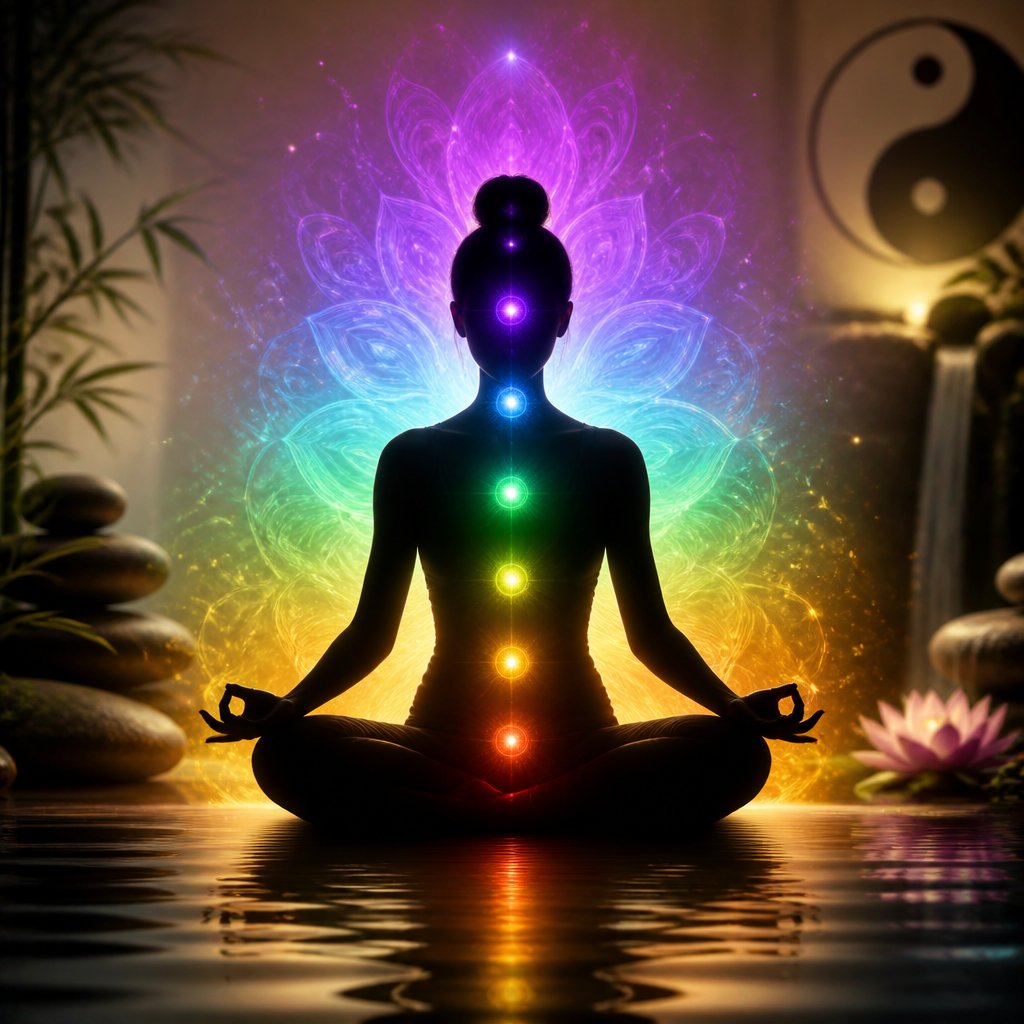
Every living thing radiates energy. In classical Chinese metaphysics 玄学 (xuánxué), we call this 气 (qì) — the vital life force that flows through all things. While most people cannot see qi directly, the subtle energy field that surrounds the human body — what many traditions call the aura — reveals the quality, balance, and health of a person’s qi in visible colour.
In my practice of Feng Shui 风水 and BaZi 八字 reading, I have learned to read the interplay of energies that shape a person’s life. The concept of aura colors corresponds naturally to the Five Elements 五行 (wǔxíng) theory that forms the foundation of all classical Chinese metaphysics. Understanding what each aura color means can give you profound insight into your own physical, emotional, and spiritual condition.
What Is an Aura?
The aura is an electromagnetic energy field that surrounds the physical body, extending outward in layers. In Chinese medicine and metaphysics, this field is an expression of your qi — the same energy that flows through your body’s meridians 经络 (jīngluò) and is influenced by the condition of your internal organs, your emotions, and your environment.
Different traditions describe varying numbers of aura layers, but they all agree on one essential principle: the colors of the aura shift constantly based on your physical health, emotional state, mental clarity, and spiritual development. A person in good health with balanced emotions will typically have a bright, clear, and expansive aura. Someone under stress or dealing with illness will show a weaker, muddier, or more contracted field.
From the perspective of Chinese metaphysics, the aura is not separate from the concepts I work with daily in Feng Shui and BaZi — it is a manifestation of the same Five Element energies that govern everything in the universe.
Aura Colors and Their Meanings
Each aura color corresponds to specific energetic qualities, which in turn relate to the Five Elements and to particular aspects of your life.
Red Aura
Red is the color of the Fire element 火 (huǒ) and of the Root Chakra at the base of the spine. A healthy red aura indicates:
- Strong physical vitality and robust health
- Grounded, practical energy
- Passion for life and healthy ambition
- A strong survival instinct
However, a dark or muddy red can indicate anger, stress, or inflammation in the body. An excessively bright, agitated red suggests someone driven by unresolved anger or compulsive behaviour. In my experience, clients with a predominantly red aura often benefit from cooling Water element energy — spending time near water, wearing blue or black, or incorporating Water element adjustments as described in my Feng Shui fundamentals guide.
Orange Aura
Orange relates to the Sacral Chakra and carries Fire-Earth energy. It represents:
- Creativity and emotional expression
- Social confidence and warmth
- Healthy relationships and sexuality
- Enthusiasm for new experiences
A clear, bright orange aura is a wonderful sign of a person who is creatively fulfilled and emotionally connected. Muddy orange suggests emotional dependency or addictive tendencies. An orange aura that is too strong may indicate someone who overindulges in pleasure-seeking.
Yellow Aura
Yellow corresponds to the Solar Plexus Chakra and the Earth element 土 (tǔ). A yellow aura reflects:
- Personal power and confidence
- Mental clarity and sharp intellect
- Optimism and joy
- A strong sense of self-worth
A bright, sunny yellow is one of the most positive aura colors I observe. It indicates a person with healthy self-esteem and clear mental focus. However, a greenish-yellow can indicate jealousy or competitiveness, while a very pale yellow may suggest someone who is overly analytical or struggles with self-doubt. The solar plexus meaning in energy healing directly connects to this aspect of the aura.
Green Aura
Green carries the energy of the Wood element 木 (mù) and the Heart Chakra. It represents:
- Growth, healing, and renewal
- Compassion and unconditional love
- Connection to nature and balance
- A nurturing, giving spirit
A clear emerald green is a beautiful sign of a healer’s energy and a heart-centred person. Forest green suggests stability and connection to nature. However, a muddy green indicates resentment or jealousy, while a very dark green suggests a person who gives too much and neglects their own needs. For those who find their green aura is imbalanced, I recommend practices that strengthen boundaries — something I discuss in my heart chakra guidance.
Blue Aura
Blue represents the Water element 水 (shuǐ) and the Throat Chakra. A blue aura indicates:
- Clear, honest communication
- Calm, peaceful presence
- Spiritual awareness and intuition
- Truth-seeking and wisdom
Light blue suggests serene, expressive individuals who communicate with grace. Dark blue or indigo indicates deep spiritual awareness and psychic sensitivity. A muddy blue can suggest fear of speaking one’s truth or blocked communication. In Feng Shui, blue is the color of the Water element, and those with strong blue auras are naturally aligned with the qualities of depth and flow that Water represents.
Violet / Purple Aura
Violet connects to the Crown Chakra and carries refined Fire energy. It signifies:
- High spiritual development
- Intuitive and psychic abilities
- Connection to higher consciousness
- Creative and artistic gifts
Violet auras are relatively rare and indicate a person who has done significant inner work. A lavender or light purple aura suggests a gentle, spiritually-oriented nature. Deep violet indicates a teacher or guide. When the violet is tinged with grey, it may indicate spiritual idealism without proper grounding — a person who is “more in the clouds than on the earth.”
Pink Aura
Pink is a variation of red that carries the Heart Chakra energy in its gentlest form:
- Pure, unconditional love
- Compassion and tenderness
- Romantic and artistic sensitivity
- Selflessness and kindness
A soft pink aura is often seen around new mothers, devoted partners, and those in the early stages of romantic love. Bright magenta indicates a passionate, artistic nature with strong leadership qualities.
White / Gold Aura
White and gold are considered the highest, most refined aura colors:
- Spiritual awakening and enlightenment
- Divine connection and protection
- Purity and truth
- Universal love
A pure white aura is extremely rare and indicates a being of extraordinary spiritual development. Gold indicates wisdom integrated into daily life — a person who has not only spiritual insight but the ability to apply it practically. In Chinese cosmology, gold relates to the Metal element 金 (jīn), which represents refinement, precision, and the highest achievement of spiritual cultivation.
Grey and Brown Auras
These are generally indicators of energetic imbalance:
- Grey suggests low energy, depression, or physical illness
- Brown indicates materialism, attachment, or a lack of spiritual development
- Dark spots in the aura indicate specific areas of blocked or stagnant energy
Reading Aura Colors in Practice
The aura is not a static thing. It shifts moment to moment based on your thoughts, feelings, health, and environment. In a single reading, I might observe a person’s base aura color — their natural energetic disposition — and then watch as it shifts in response to different topics or questions.
The base aura color tends to correlate with a person’s dominant element in their BaZi 八字 destiny chart. Someone with strong Fire in their Four Pillars often has a reddish-orange base aura. Someone with strong Water tends toward blue. This connection between the Five Elements and aura colors is one of the most fascinating bridges between Western energy healing traditions and classical Chinese metaphysics.
To begin reading aura colors, I recommend the following:
-
Practice on yourself first — sit quietly, relax your gaze, and look at your hand against a plain white background. Soften your focus until you begin to perceive a faint glow around the edges.
-
Learn your own patterns — notice which colors appear when you feel happy, stressed, tired, or inspired. This gives you a baseline for understanding your energetic state.
-
Consider your Five Element profile — use the Chinese zodiac calculator or a BaZi reading to understand which elements are strong or weak in your chart. Your aura colors will reflect this balance.
-
Check your environment — your home or office Feng Shui affects your aura. An excess of Fire elements in your space may intensify red in your aura; too much Water may produce excessive blue. See my guide on lucky colors for balancing techniques.
Balancing Your Aura with Chinese Metaphysics
Classical Chinese metaphysics offers several effective methods for balancing aura colors:
Feng Shui adjustments — Modify the element balance in your living space to support healthy aura colors. For example, if your aura shows excess red (agitated Fire), introduce Water elements — a fountain, dark colors, or curved shapes — to create balance.
Color therapy — Wear clothing in the color you wish to strengthen. If your aura is weak in green (Wood), adding green clothing and plants to your environment replenishes this energy. I discuss this in detail in my articles on lucky colors and wealth Feng Shui.
Qi Gong and meditation — Regular energy cultivation practice naturally clears and strengthens the aura. Even ten minutes of mindful breathing can noticeably brighten your energy field.
BaZi-informed lifestyle — The most powerful approach to aura health is to live in alignment with your natural element profile. A BaZi 八字 consultation will reveal your elemental strengths and weaknesses, allowing you to make targeted adjustments to your diet, environment, and daily routines.
For a comprehensive understanding of how your energy field interacts with the world around you, I invite you to explore my aura colours guide — the complete cluster guide — and my exploration of the Chinese divination arts that connect energy reading to the broader tradition of classical Chinese metaphysics. You may also benefit from my guide to the Five Elements 五行, which provides the theoretical foundation for understanding how these energies interact.
